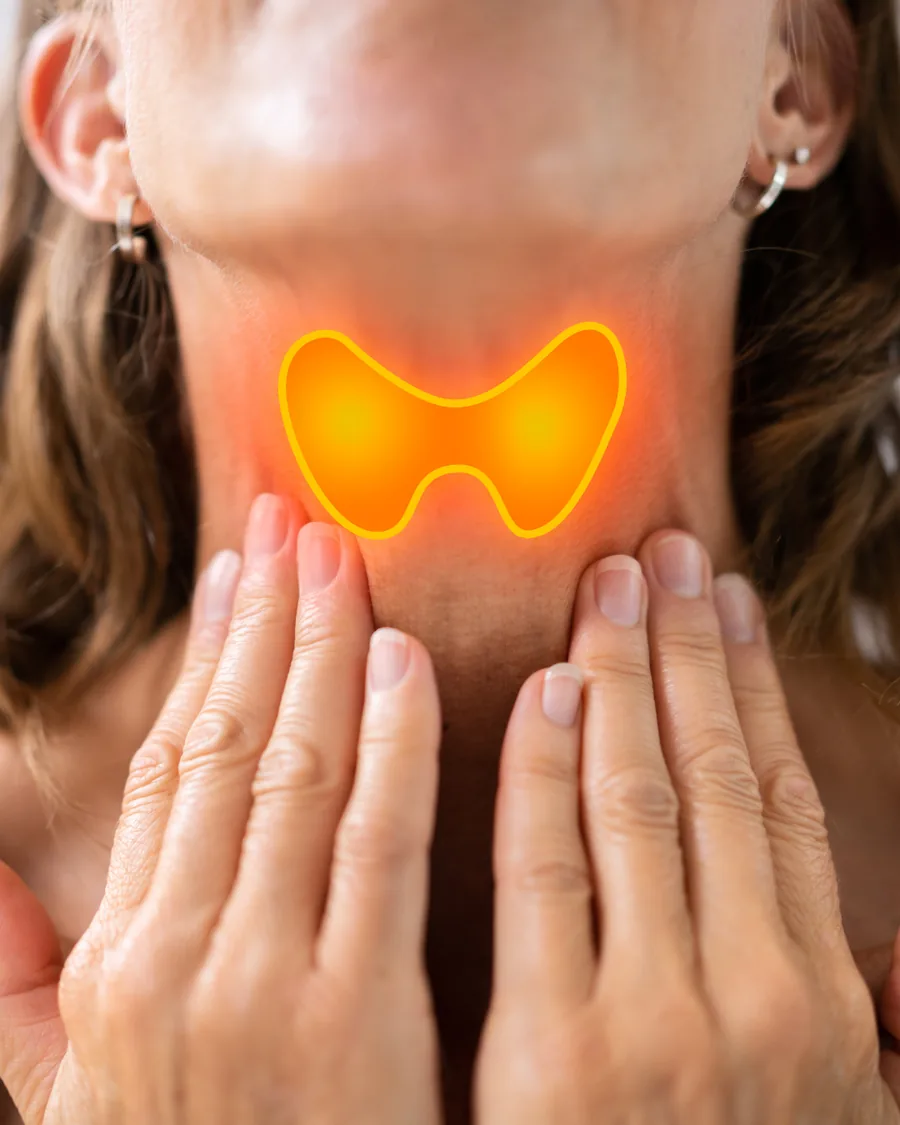
Your thyroid is a small gland just below your throat and above your collarbone that sets the pace for much of your body's metabolism. When it produces too little or too much hormone, the effects can show up almost anywhere: energy, weight, mood, skin, heart rhythm, sleep, and menstrual cycles. According to the American Thyroid Association, about 20 million Americans have some form of thyroid disease, and up to 60 percent of them are unaware of it. Women are five to eight times more likely than men to have thyroid problems, and about 1 in 8 women will develop a thyroid disorder during her lifetime.
Because thyroid symptoms are so varied, they are easy to attribute to stress, a busy season, or getting older. This guide walks through 19 signs worth knowing, explains how a thyroid blood test is interpreted, and describes what a thorough evaluation and follow-up look like.
How the Thyroid Affects the Whole Body
Thyroid hormone acts on nearly every organ. It influences how quickly your body uses energy, how warm you stay, how fast your heart beats, and how your digestive system moves. An underactive thyroid, called hypothyroidism, tends to slow these processes down. An overactive thyroid, called hyperthyroidism, tends to speed them up.
Many thyroid symptoms overlap with other common causes of fatigue, weight change, or poor sleep. That overlap is exactly why a careful history and the right blood tests matter. A physician who looks at the whole pattern can tell whether the thyroid is part of the explanation.
10 Signs of an Underactive Thyroid
The National Institute of Diabetes and Digestive and Kidney Diseases lists the following as common symptoms of hypothyroidism:
1. Fatigue that persists despite adequate sleep.
2. Weight gain without a clear change in diet or activity.
3. Trouble tolerating cold, or feeling cold when others are comfortable.
4. Joint and muscle aches.
5. Dry skin.
6. Dry or thinning hair.
7. Heavy or irregular menstrual periods.
8. Difficulty becoming pregnant.
9. A slower heart rate than usual.
10. Low mood or depression.
In the United States, Hashimoto's thyroiditis, an autoimmune condition, is the most common cause of hypothyroidism.
9 Signs of an Overactive Thyroid
The same institute lists these as common symptoms of hyperthyroidism:
11. Weight loss despite an increased appetite.
12. A rapid or irregular heartbeat.
13. Nervousness or irritability.
14. Trouble sleeping.
15. Shaky hands.
16. Muscle weakness.
17. Sweating or trouble tolerating heat.
18. More frequent bowel movements.
19. A goiter, an enlarged thyroid that can appear as swelling at the front of the neck.
Graves' disease, also an autoimmune condition, is the most common cause of hyperthyroidism.
Thyroid Symptoms in Women
Thyroid problems are far more common in women, and several symptoms overlap with other stages of life. Heavy or irregular periods, fertility difficulty, fatigue, and mood changes can all be thyroid related, and they are often attributed to stress, pregnancy, or perimenopause. Thyroid function also changes during pregnancy, and the normal range for TSH is different for women who are pregnant. If several of these symptoms sound familiar, a thyroid evaluation is a simple, worthwhile step. Our women's health page describes how we approach care across every stage of life.
READ: Women's Health: Your Partner in Comprehensive Care
Understanding a TSH Result
The most common thyroid test measures thyroid-stimulating hormone, or TSH. TSH is made by the pituitary gland and signals your thyroid to produce hormone. The main hormone your thyroid makes is thyroxine, or T4. A free T4 test measures the T4 that circulates unbound in your blood and is available for your body to use. A high TSH usually means the thyroid is underactive, and a low TSH usually means it is overactive. A typical reference range runs from about 0.4 to 4.8, though it varies by laboratory.
A single TSH number is a useful starting point, and it is most informative when your physician reads it alongside free T4, your symptoms, and your history. Subclinical hypothyroidism is a good example. It describes an elevated TSH with a normal free T4 level, and it is often rechecked over time before any decision about treatment. TSH can also rise naturally with age, so a mild elevation in an older adult does not always mean the thyroid is failing.
What Can Affect Thyroid Test Results
Several everyday factors can change thyroid test results, which is why your physician will ask about them before your blood is drawn. Biotin is the most common. This supplement, often found in hair, skin, and nail products, can interfere with thyroid tests, and the American Thyroid Association advises stopping biotin for two days before thyroid blood work. Time of day matters too, since TSH varies through the day and testing early in the morning is generally preferred.
Pregnancy shifts the normal ranges, especially in the first trimester. Several medications, including estrogen, birth control pills, amiodarone, lithium, and prednisone, can affect results. A serious illness unrelated to the thyroid can also lower TSH temporarily. If you already take thyroid medication, ask whether to take your dose before or after the blood draw. Thyroid blood work can be drawn in our office or at a local lab you prefer through our labs and diagnostics service.
How to Prepare for a Thyroid Blood Test
A little preparation makes your thyroid test more reliable. Stop biotin, including hair, skin, and nail supplements that contain it, for two days before the test. Schedule the blood draw early in the morning when possible. At the visit where your physician orders the test, review a complete list of your medications and supplements, including hormone therapy and birth control, and mention any recent illness, pregnancy, or change in thyroid medication dose. These steps help your physician read the result accurately and avoid repeating a test that was affected by something unrelated to your thyroid.
The Autoimmune Connection
The most common causes of thyroid disease in the United States are autoimmune. In Hashimoto's thyroiditis, the immune system gradually damages the thyroid, which reduces hormone production over time. In Graves' disease, the immune system stimulates the thyroid to produce too much hormone. Both conditions tend to run in families and are more common in women. They are also more common in people who have other autoimmune conditions, such as type 1 diabetes, celiac disease, or rheumatoid arthritis. A blood test for thyroid antibodies can help confirm an autoimmune cause, which helps your physician understand how the condition is likely to change over time and how closely to monitor it.
Thyroid Changes With Age
Thyroid problems can look different in older adults. Fatigue, memory changes, constipation, or low mood can be easy to attribute to aging itself. In some older adults, an overactive thyroid causes fewer of the classic symptoms and shows up instead as weight loss, a fast or irregular heartbeat, or weakness. At the same time, TSH levels tend to rise gradually with age, and a mildly elevated TSH in an older adult does not always need treatment. Interpreting thyroid tests later in life takes careful judgment, with attention to symptoms, heart health, other medications, and how the numbers change over time.
When a Thyroid Evaluation Makes Sense
A thyroid evaluation is worth considering when several of the signs above appear together, especially when they persist for weeks. It also makes sense if you have a family history of thyroid disease or another autoimmune condition, a new change in heart rhythm, a recent pregnancy, or unexplained changes in weight, energy, or mood. A physician who knows your baseline can tell whether a new symptom represents a real change, and can decide which additional tests, such as free T4 or thyroid antibodies, would clarify the picture.
What Treatment and Follow-Up Look Like
Treatment depends on the cause and on how much thyroid function has changed. An underactive thyroid is commonly treated with thyroid hormone replacement, taken by mouth each day. The dose is adjusted gradually based on repeat blood tests and how you feel, and it may change over the years with age, weight, pregnancy, or other medications. An overactive thyroid can be treated with medication, radioactive iodine, or surgery, depending on the cause and your circumstances, often with input from an endocrinologist.
For both conditions, follow-up matters as much as the initial diagnosis. Thyroid levels are rechecked after each dose change and then at regular intervals once they are stable. A physician who tracks your results over time can adjust treatment early, before symptoms return.
Thyroid Nodules and Neck Changes
Some thyroid concerns involve the structure of the gland rather than its hormone levels. Thyroid nodules are lumps within the thyroid, and many are found by chance during an exam or an imaging test done for another reason. Most nodules are benign, though some need evaluation with an ultrasound and, in certain cases, a biopsy. Swelling at the front of your neck, a new lump, hoarseness that lasts, or difficulty swallowing are all worth mentioning to your physician, who can decide whether imaging is needed and coordinate any referral to a specialist.
Living Well With a Thyroid Condition
Most people with a thyroid condition feel well once their levels are stable, and a few habits help keep it that way. Take your thyroid medication consistently, at the same time each day, and follow your physician's guidance about how to take it in relation to food, coffee, and other medications or supplements, since some can affect absorption. Keep your follow-up appointments and blood tests, even when you feel well. Report new symptoms promptly, such as palpitations, unusual fatigue, or weight changes, because they can signal that a dose needs adjusting. If you are planning a pregnancy, talk with your physician ahead of time, since thyroid needs often change. With steady monitoring, a thyroid condition becomes one more part of a well-managed health plan. Our hormone health page explains how thyroid care fits with the rest of your hormone health.
How Naples Concierge Health Approaches Thyroid Care
Physicians Dr. Jonathan Marsh and Dr. Danielle Grossman-Stuart evaluate thyroid symptoms with the time a full history requires. That includes reviewing the supplements and medications that can affect your results, and interpreting TSH alongside free T4, your symptoms, and your earlier lab trends. Follow-up testing is planned and tracked over time, so a borderline result is rechecked on schedule. You can read more on our thyroid page.
Wondering Whether Your Thyroid Is Involved?
For a thyroid evaluation that looks at the full picture, book a gap assessment with Naples Concierge Health. You can also browse everything Naples Concierge Health offers to see the fuller picture first.
Frequently Asked Questions
How do I know if I have a thyroid problem?
Persistent fatigue, unexplained weight change, feeling unusually cold or hot, heart rate changes, and changes in mood or menstrual cycles can all point to the thyroid. A blood test, usually starting with TSH, is how your physician confirms it.
What are the signs of thyroid issues in women?
Women may notice heavy or irregular periods, difficulty becoming pregnant, fatigue, weight change, hair thinning, and mood changes. Because these overlap with other life stages, a thyroid test is a useful step when several appear together.
Can my TSH be normal and my thyroid still be a concern?
A normal TSH usually means thyroid function is normal. Your physician may still order additional tests, such as free T4 or thyroid antibodies, when symptoms, family history, or earlier results point toward a closer look.
What is subclinical hypothyroidism?
It is an elevated TSH with a normal free T4 level. Many cases are monitored with repeat testing over several months, and treatment decisions depend on the TSH level, your symptoms, and other health factors.
Does biotin affect thyroid tests?
Yes. Biotin can interfere with thyroid blood tests, and the American Thyroid Association advises stopping it for two days before testing. Biotin is common in hair, skin, and nail supplements.
Do thyroid problems run in families?
Often, yes. Autoimmune thyroid conditions such as Hashimoto's thyroiditis and Graves' disease tend to run in families. A family history of thyroid disease is a good reason to mention symptoms early and to consider testing.
Can thyroid problems affect the heart?
Yes. An underactive thyroid can slow the heart rate, and an overactive thyroid can cause a rapid or irregular heartbeat. A new change in heart rhythm is one reason your physician may check thyroid function.
How is an underactive thyroid treated?
It is commonly treated with daily thyroid hormone replacement taken by mouth. The dose is adjusted based on repeat blood tests and your symptoms, and it may need to change over time.
Are thyroid nodules a cause for concern?
Most thyroid nodules are benign. Some need an ultrasound and, in certain cases, a biopsy to evaluate them. A new lump in the neck, lasting hoarseness, or trouble swallowing are worth raising with your physician.
You might also be interested in reading: