Dr. Danielle Grossman-Stuart, board-certified family medicine physician, Naples Concierge Health
Written by: Dr. Danielle Grossman-Stuart
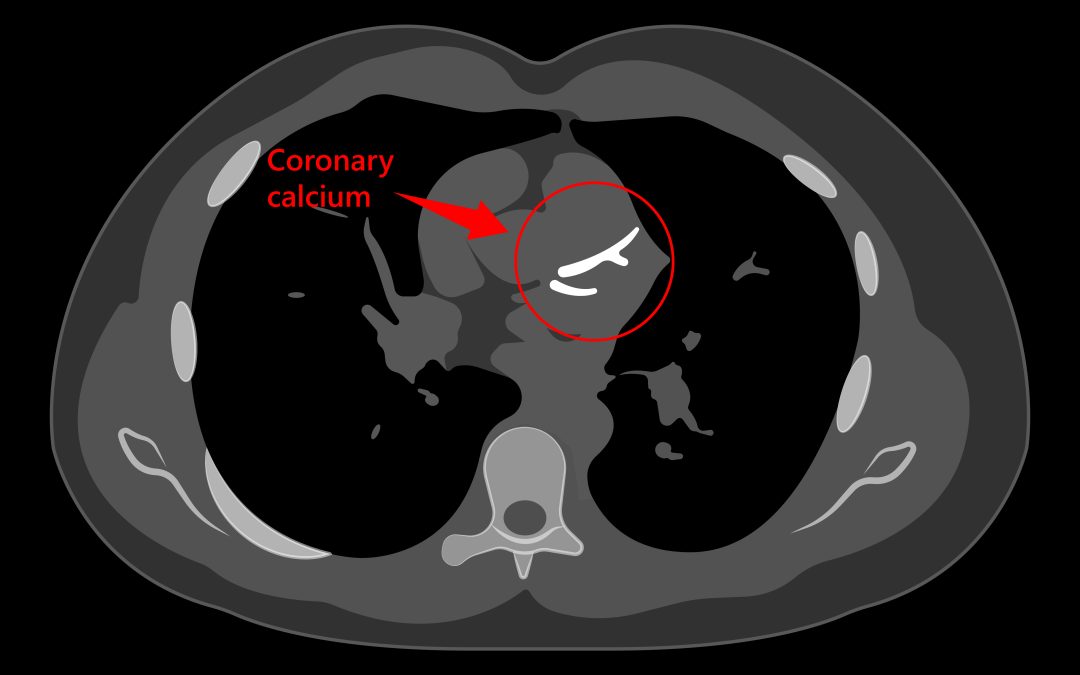
If you have a family history of heart disease but your cholesterol numbers are favorable, or you have been reluctant to start a statin, a calcium score may be the perfect tool to help you best optimize your care. is one of the more common questions I hear from people who feel well and intend to stay that way. A coronary calcium score is a fast, low-dose CT scan that measures the calcified plaque in the arteries of your heart, and it is one of the most reliable predictors we have of a future heart attack.
What a Calcium Score Actually Measures
Traditional risk calculators estimate your odds from averages: your age, blood pressure, cholesterol, and whether you smoke. They are useful, but they describe people like you, not you. A calcium score looks directly at your own arteries and shows what has actually accumulated over a lifetime. Two people with identical cholesterol can have very different scores, and the 2026 ACC/AHA dyslipidemia guidelines endorse using that difference to help decide whether a statin is worth starting (Blumenthal et al., 2026).
Reading the Number: The Agatston Scale
The result comes back as a single number, the Agatston score:
- 0: no detectable calcium
- 1 to 99: mild plaque
- 100 to 399: moderate plaque
- 400 and above: extensive plaque
That number is where most explanations stop. It is also where the interesting part begins.
The same number means different things in different people. The absolute score tells us about risk in the near term. Where it falls for your age and sex tells us about the decades ahead.
A Zero Isn’t a Free Pass
A zero is reassuring, not a clearance. Cardiologists call this the “power of zero,” and the reassurance has been studied (Dzaye et al., 2021). In a large analysis from the Multi-Ethnic Study of Atherosclerosis, it holds for roughly three to seven years, less if you have diabetes. But the scan sees calcified plaque only. Soft, non-calcified plaque is invisible to it, and that is the kind more prone to rupture. People with elevated Lp(a), diabetes, or a strong family history can carry meaningful disease behind a zero score. A zero is good news, but it needs to be read in context.
A High Score Isn’t a Blockage
A score of 400 tells us plaque is present and extensive. It does not tell us any artery is narrowed, and it is not a reason for a stent. It is a reason to treat aggressively and prevent the event.
What Happens After the Number Comes Back
When my friends and family have gotten calcium scores, they get their results and send them to me with the question, “what does this mean?” They had taken the proactive step, but we still had to interpret each score and put it in their individual context to get the full value of the test.
In my office, that is a conversation. You leave understanding your own number, where it lands for your age and sex, what it tells us, and what it does not. You see it alongside the rest of your picture, your Lp(a), your ApoB, your family history, your blood pressure. You leave with a plan you can act on, and with the reasoning behind it. And you are not left alone with it. As your concierge physician, I follow the number over time and adjust as things change, with the plan always pointed at what matters most to you.
A calcium score is a powerful test, and its value depends entirely on what happens after the number comes back.
 Dr. Danielle Grossman-Stuart is a board-certified family medicine physician at Naples Concierge Health, focused on prevention, root-cause care, and building longitudinal relationships with members over time. Inquire about a meet-and-greet with Dr. Grossman-Stuart by calling (239) 690-6286 or scheduling a time to speak with our member liaison.
What to Do Next
- Ask about a calcium score if you have a family history of heart disease but favorable cholesterol numbers.
- Ask about a calcium score if you’ve been hesitant to start a statin and want objective data to guide the decision.
- If your score comes back zero, ask whether additional markers — Lp(a), ApoB, or a closer look at family history — are warranted before treating it as the full picture.
- If your score is elevated, don’t interpret it alone. Speak with your physician, who can place it in the context of your full risk profile before assuming it means a blockage.
Frequently Asked Questions
What is a coronary calcium score?
A coronary calcium score is a low-dose CT scan that measures calcified plaque in the heart’s arteries, giving a direct, individual measure of cardiovascular risk rather than a population-based estimate.
What does a calcium score of zero mean?
A zero means no calcified plaque was detected, which is reassuring for roughly three to seven years in most people. It does not rule out soft, non-calcified plaque, particularly in people with diabetes, elevated Lp(a), or a strong family history.
Is a high calcium score a sign of a blockage?
No. A high score indicates plaque is present and extensive, but it does not mean an artery is narrowed or that a stent is needed. It signals a need for more aggressive prevention, not intervention.
Who should get a coronary calcium scan?
People with a family history of heart disease but favorable cholesterol, and those hesitant to start a statin without more individualized data, are often good candidates. It’s best discussed with a physician who can weigh it against your full risk profile.
How does a concierge physician in Naples incorporate yoga into preventive care?
As a certified yoga instructor, Dr. Grossman-Stuart brings a unique clinical understanding of breath, movement, and nervous system regulation into member care. Rather than recommending yoga generically, she can integrate it into a member’s specific preventive plan based on their blood pressure, stress profile, joint health, and fitness goals.
References
-
Blumenthal, R. S., Morris, P. B., Gaudino, M., et al. (2026). 2026 ACC/AHA guideline on the management of dyslipidemia: A report of the American College of Cardiology/American Heart Association Joint Committee on Clinical Practice Guidelines. Journal of the American College of Cardiology, 87(19), 2624–2757. https://doi.org/10.1016/j.jacc.2025.11.016
-
Dzaye, O., Dardari, Z. A., Cainzos-Achirica, M., Blankstein, R., Agatston, A. S., Duebgen, M., Yeboah, J., Szklo, M., Budoff, M. J., Lima, J. A. C., Blumenthal, R. S., Nasir, K., & Blaha, M. J. (2021). Warranty period of a calcium score of zero: Comprehensive analysis from MESA. JACC: Cardiovascular Imaging, 14(5), 990–1002. https://doi.org/10.1016/j.jcmg.2020.06.048